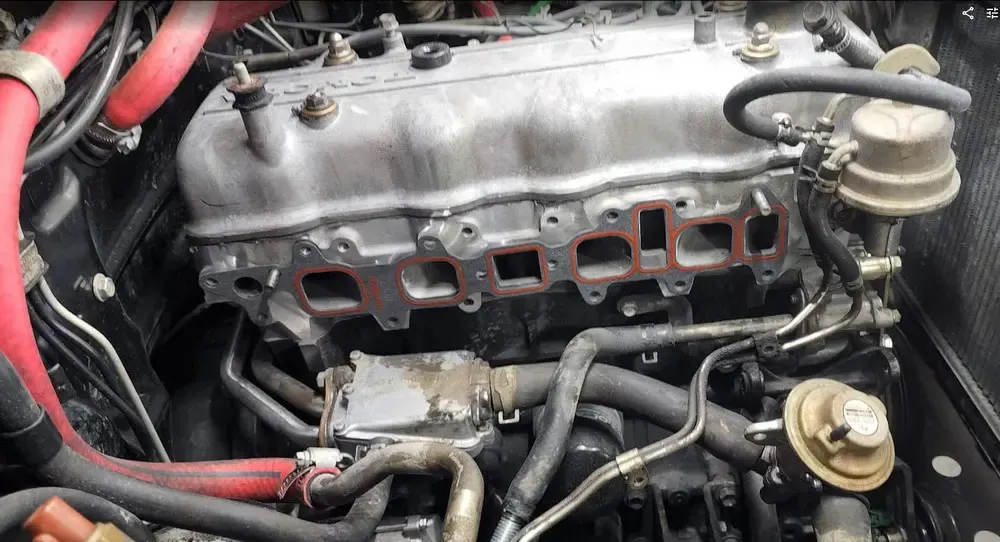
The common fuel system problem symptoms are long cranking before the engine starts, hesitation or stumbling when you accelerate, a raw fuel smell, a rough idle, and fuel economy that drops for no obvious reason. Weak fuel pumps, clogged filters, dirty or leaking injectors and evaporative system leaks cause most of them. A fuel smell is the one sign to act on straight away: park the car outside, away from anything that could spark, and do not keep driving it.
It belongs to the Blue Rose Auto Engine & Transmission Guide, which links every symptom page.
How fuel gets from the tank to the cylinders
On a modern gasoline car, an electric pump sits inside the tank. It pushes fuel through a filter and a line to the engine, where a rail feeds the injectors. A computer decides how long each injector stays open, using readings from the oxygen sensors, airflow sensor and others. Many newer engines use direct injection, with a second high-pressure pump on the engine itself.
A separate evaporative emissions system (EVAP) catches fuel vapor from the tank and burns it in the engine instead of venting it. The gas cap is part of that sealed system.
Any link in that chain can cause trouble. The trick is matching the symptom to the link.
Symptom by symptom
| Symptom | Common causes | What to check first |
|---|---|---|
| Long crank, then starts | fuel pressure bleeding off overnight, leaking injector, weak pump | does it start normally if you turn the key on for a few seconds before cranking? |
| Cranks but will not start | dead pump, blown fuse or relay, empty tank with a faulty gauge | listen for the pump's brief hum at key-on |
| Hesitation on acceleration | clogged filter, weak pump, dirty injectors, airflow sensor | does it get worse uphill or with a load? |
| Rough idle, slight shake | dirty or failing injector, vacuum leak | is the check engine light on? |
| Raw fuel smell | leaking line, injector seal, filler neck, EVAP fault | park it; look for drips only when it is safe |
| Falling mileage | injector leak, oxygen sensor, tire pressure, driving pattern | compare several tanks, not one |
| Check engine light after a fill-up | loose or damaged gas cap, EVAP leak | tighten the cap until it clicks |
| Stalling when warm | pump overheating, pressure regulator | does it restart after cooling? |
The gas cap and the check engine light
A loose gas cap is the cheapest fix in this whole guide. Oregon DEQ explains that most OBD vehicles run self-tests for evaporative leaks, and a broken cap or one not fully tightened can set the check engine light. Re-tighten it and drive normally for a few days. The car can clear the light itself once the fault no longer shows up. If it stays on, the leak is somewhere else in the EVAP system, often a hose or purge valve. More on reading that light is in our check engine light guide.
Poor mileage: separate the fuel system from everything else
A drop in miles per gallon has plenty of causes that have nothing to do with fuel parts. Cold weather, short trips, winter fuel blends and underinflated tires all cut mileage. The US Department of Energy's fuel economy maintenance page notes that a check engine light can signal a problem that lowers fuel economy, and that keeping tires at the right pressure also makes a measurable difference.
Use a simple test before blaming the fuel system:
- 1Fill the tank, reset the trip meter and note the miles.
- 2Drive normally for a full tank.
- 3Divide miles by gallons at the next fill.
- 4Repeat for two or three tanks and compare with what the car used to get.
A steady drop of more than a few miles per gallon over several tanks, with tire pressure correct, is worth a closer look.
Safety rules around fuel
- Never drive a car that smells strongly of raw gasoline inside the cabin.
- Do not smoke or use a lighter while checking for a leak.
- Do not crank a flooded engine over and over. Wait, then try again.
- Avoid running the tank near empty often. The in-tank pump uses fuel to stay cool, and running low regularly can shorten its life.
- Store spare fuel only in an approved container, outside the cabin.
What drives the repair cost
- Which part. A gas cap, a fuel filter and an in-tank pump sit at very different levels.
- Access. Some pumps come out through a panel under the rear seat. Others need the tank dropped.
- Injection type. Direct injection uses a high-pressure pump and injectors that cost more and take longer to replace.
- Diagnosis. A pressure test is quick. An intermittent stall that only happens when hot can take longer to catch.
- Related damage. A leaking injector can foul plugs or wash oil off a cylinder wall if left alone.
A fuel fault and an overheating fault can look alike when a car stalls on a hot day. If the gauge climbed before the stall, start with the overheating guide.
Blue Rose Auto Care & Repair Services is a Springfield, Oregon shop where ASE-certified technicians handle mechanical repair, including fuel delivery problems, alongside collision and detailing. If you are chasing a hard start or a fuel smell, the fuel system page from Blue Rose Auto explains how to book a diagnosis.